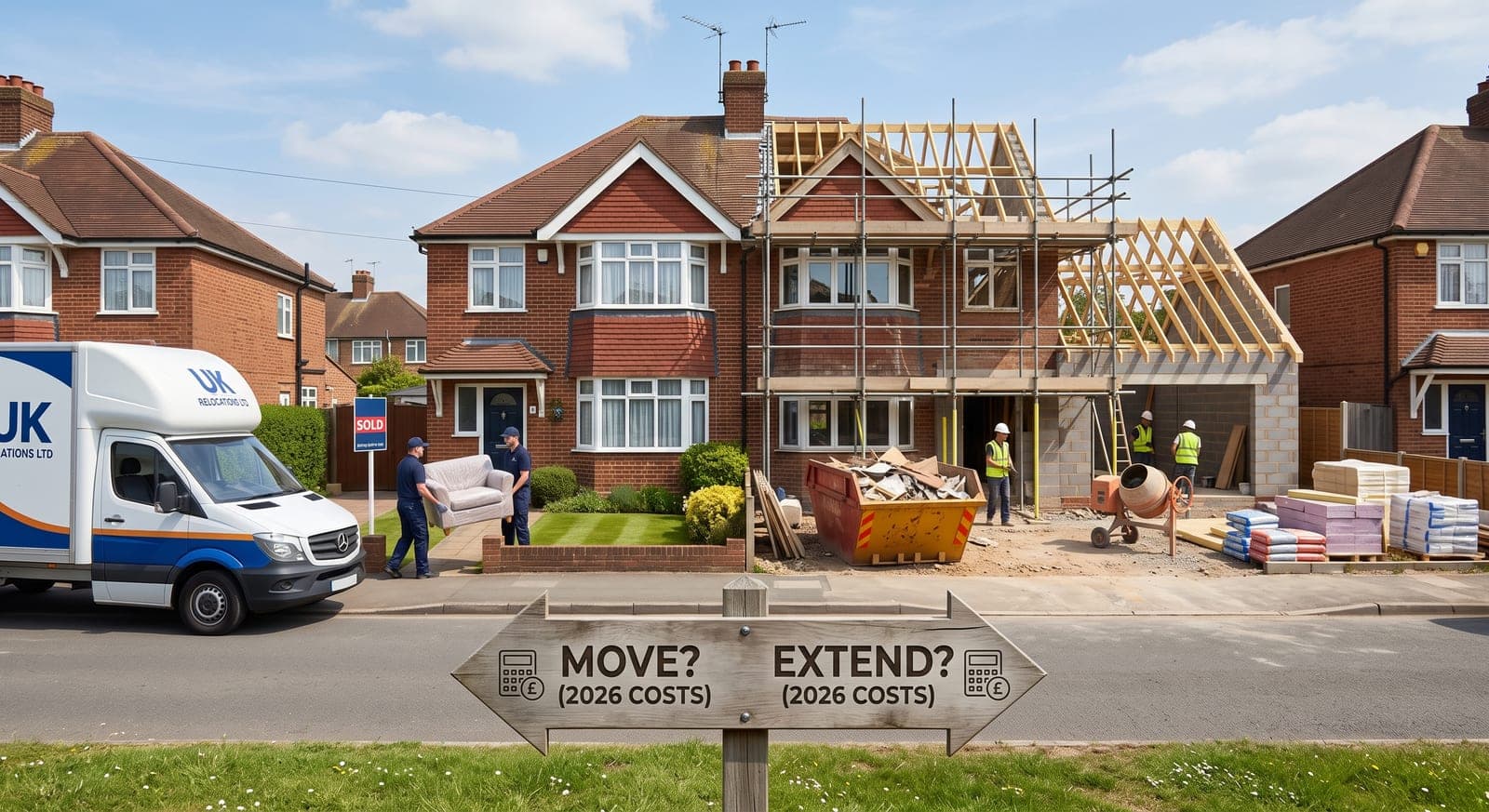
Welcome to 2026. Mortgage rates have settled into a new normal, but moving house still feels like a massive financial leap. The most common question we hear during our initial architectural consultations is: "Are we crazy to spend this much on an extension, or should we just move?"
The truth is, there is no one-size-fits-all answer. Construction costs have risen, but so have house prices; and with them, the "sunk costs" of moving. Sunk costs are the unrecoverable expenses you pay just to change addresses: Stamp Duty Land Tax (SDLT), estate agent fees (typically 1-1.5% + VAT), conveyancing, and removals. (Stamp duty figures below use the standard rates in England from April 2025, for a home mover who is not a first-time buyer.)
To help you make sense of it, let’s look at three realistic scenarios across North-East London and Essex to see where the maths truly leads.
Example 1: The Walthamstow Terraced House
The Goal: A family of four living in a £700,000 three-bedroom Victorian terrace wants a fourth bedroom, a dedicated home office, and a significantly larger garden for the kids. The Target: A £950,000 four-bedroom house further out in the suburbs.
The Maths:
- Cost to move: SDLT on a £950,000 home is roughly £38,750. Add in £12,600 for estate agent fees (selling the £700k home), plus £4,000 for legal and removal fees. Total sunk cost: ~£55,350.
- Cost to extend: To get the internal space, they would need a loft conversion and a rear extension (approx. 40 square metres of new space). At 2026 London build rates, plus VAT and professional fees, this would comfortably exceed £140,000.
- The Catch: Even if they spend £140,000, they cannot magically create a larger garden on a tight urban plot.
The Verdict: 1) Move. While dropping over £55,000 on moving fees is painful, dropping £140,000 on a house that still doesn't meet the family's outdoor space requirements is a poor investment. When your lifestyle outgrows your plot boundaries, it is time to pack boxes.
Example 2: The Loughton Semi-Detached
The Goal: A couple in an £850,000 three-bedroom semi in Loughton loves their street and their neighbours, but their dark, enclosed kitchen is driving them mad. They want a bright, 25-square-metre open-plan kitchen and dining space with bi-fold doors. The Target: A £1,100,000 house in the same area that already has the "done" open-plan layout.
The Maths:
- Cost to move: SDLT on a £1.1m home is a hefty £53,750. Estate agent fees on the £850k sale will be around £15,300. With legal and removal costs, the total sunk cost is ~£73,050.
- Cost to extend: A high-quality 25-square-metre single-storey rear extension. Allowing £3,000 per square metre, plus a new kitchen, VAT, and architectural/planning fees, the total project cost sits around £95,000.
The Verdict: 2) Extend. Look closely at the maths: they would spend over £73,000 just for the privilege of moving, adding exactly £0 to the value of their asset. By choosing to extend, they invest £95,000 directly into their own property, adding tangible equity, maintaining their social ties, and getting a bespoke kitchen designed exactly to their tastes.
Example 3: The Colchester Detached
The Goal: A growing family in a £400,000 three-bedroom modern detached house in Colchester needs a fourth bedroom for a new baby. The Target: A £480,000 four-bedroom house in a neighbouring estate.
The Maths:
- Cost to move: SDLT on £480,000 is relatively low at £14,000. Agent fees on the £400k sale are £7,200. Total sunk cost including legals and moving: ~£24,200.
- Cost to extend: Adding a fourth bedroom via a loft conversion or a two-storey side extension will likely cost between £50,000 and £65,000 once VAT and fees are factored in.
The Verdict: 3) It depends. Financially, moving is the cheaper short-term option. The sunk costs of moving (£24,200) are less than half the cost of building a new bedroom (£50,000+). However, this equation isn't just about spreadsheets.
If they extend, they avoid uprooting their older children from local schools, they dodge the stress of a property chain, and the £50,000 spent improves their home's long-term ceiling price. If they move, they save immediate cash but have to deal with the chaos of the housing market. Here, the right answer depends entirely on their emotional attachment to the current house and their appetite for living through a construction project.
Ready to do the maths on your own home?
Every property is unique, and a quick online calculator can't account for complex rooflines, tricky drainage, or local planning constraints. Before you call the estate agent, book a feasibility consultation with our practice. We'll look at your plot, listen to your goals, and give you the honest numbers you need to decide.